Tag: Album

The Revolution Will Not Be Televised

 You will not be able to stay home, brother
 You will not be able to plug in, turn on and drop out
 You will not be able to lose yourself on skag and skip
 Skip out for beer during commercials
 Because the revolution will not be televised
 The revolution will not be televised
 The revolution will not be brought to you by Xerox
 In 4 parts without commercial interruption
 The revolution will not show you pictures of Nixon
 Blowing a bugle and leading a charge by John Mitchell
 General Abrams and Spiro Agnew to eat
 Hog maws confiscated from a Harlem sanctuary
 The revolution will not be televised
 The revolution will be brought to you by the Schaefer Award Theatre and will not star Natalie Wood and Steve McQueen or Bullwinkle and Julia
 The revolution will not give your mouth sex appeal
 The revolution will not get rid of the nubs
 The revolution will not make you look five pounds
 Thinner, because The revolution will not be televised, Brother
 There will be no pictures of you and Willie Mays
 Pushing that cart down the block on the dead run
 Or trying to slide that color television into a stolen ambulance
 NBC will not predict the winner at 8:32 or the count from 29 districts
 The revolution will not be televised
 There will be no pictures of pigs shooting down
 Brothers in the instant replay
 There will be no pictures of young being
 Run out of Harlem on a rail with a brand new process
 There will be no slow motion or still life of
 Roy Wilkens strolling through Watts in a red, black and
 Green liberation jumpsuit that he had been saving
 For just the right occasion
 Green Acres, The Beverly Hillbillies, and
 Hooterville Junction will no longer be so damned relevant
 and Women will not care if Dick finally gets down with
 Jane on Search for Tomorrow because Black people
 will be in the street looking for a brighter day
 The revolution will not be televised
 There will be no highlights on the eleven o'clock News
 and no pictures of hairy armed women Liberationists and
 Jackie Onassis blowing her nose
 The theme song will not be written by Jim Webb, Francis Scott Key
 nor sung by Glen Campbell, Tom Jones, Johnny Cash
 Englebert Humperdink, or the Rare Earth
 The revolution will not be televised
 The revolution will not be right back after a message
 About a white tornado, white lightning, or white people
 You will not have to worry about a germ on your Bedroom
 a tiger in your tank, or the giant in your toilet bowl
 The revolution will not go better with Coke
 The revolution will not fight the germs that cause bad breath
 The revolution WILL put you in the driver's seat
 The revolution will not be televised
 WILL not be televised, WILL NOT BE TELEVISED
 The revolution will be no re-run brothers
 The revolution will be live

The Revolution Will Not Be Televised war ursprünglich ein Gedicht, das Gil Scott-Heron 1970 im Alter von 21 Jahren schrieb, und das er, nur von Trommeln begleitet, im Stile einer Spoken-Word-Performance präsentierte, auf seinem ersten Album »Small Talk at 125th and Lenox«. Ein Jahr später nimmt er es erneut auf, diesmal von einem treibenden Groove aus Funk und Blues untermalt, und erschienen auf dem Album Pieces of a Man (1971).

Hybrid Revolution: Protestmusik für das 21. Jahrhundert

Atlanta, London und New York, beide Seiten des Atlantiks, Post-Punk, Soul und Politik, all dies vermengen Franklin James Fisher, Ryan Mahan, Lee Tesche und Matt Tong als Algiers zu einem aufregenden Sound, dessen Wut und Protesthaltung sie dennoch, oder gerade deswegen, bereits auf die ganz großen Bühnen dieser Welt führte – als Vorband von Depeche Mode auf deren Global Spirit Tour.

Ihre Musik, die ganz bewusst verschiedene Musikformen und -traditionen mischt, und darin dem Ethos des Post-Punk treu bleibt, ist der vertonte Einspruch gegen die zahllosen Missstände und Ungerechtigkeiten eines Systems, eines globalen Kapitalismus, der einerseits kryptofaschistische und autoritäre Regierungen von Trump bis Erdogan hervorbringt wie es andererseits auf strukturellen Ausgrenzungs- und Ausbeutungsverhältnissen fußt, denen sich auch heute noch weite Teile der Weltbevölkerung ausgeliefert sehen. Franklin James Fisher selbst stammt aus Atlanta, aus dem Süden der USA, und nach wie vor existieren hier rassistische Strukturen, leben die Vorurteile gegenüber Schwarzen und Minderheiten weiter in den Köpfen vieler Weißer. So erzählen die Texte Algiers‘ von Unterdrückung, Rassismus und der Wut auf ein „Schweinesystem“, das an seiner Oberfläche die Teilhabe am Wohlstand für alle verspricht – und dessen Unterseite sich Algiers auf ihrem aktuellen Album The Underside Of Power widmen.

Das Album eröffnet ein Ausschnitt aus einer Rede Fred Hamptons, der in den Sechzigern, in den Jahren des Civil Rights Movements und der wachsenden Militanz, einer der charismatischsten Leader der Black Panther war, und der am 4. Dezember 1969 mit gerade einmal 21 Jahren von einem Sondereinsatzkommando des FBI erschossen wurde.

https://upload.wikimedia.org/wikipedia/en/9/94/Fred_Hampton.jpg

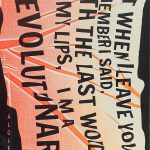
„But when I leave you remember I said, with the last words on my lips, I am a revolutionary. And you’re going to have to keep on saying that. You’re going to have to say that I am a proletariat. I am the people. I’m not the pig. You’ve got to make a distinction. And the people are going to have to attack the pig

But when I leave you remember I said, with the last words on my lips, I am a revolutionary.“

Algiers greifen so explizit die Tradition eines schwarzen Aktivismus auf und verkennen zugleich nicht, dass sie sich vor allem der symbolischen Kraft ihrer Musik und Performance bedienen, um auf das Elend der Welt aufmerksam zu machen. Doch lassen die Texte an Deutlichkeit in der Aussage kaum etwas im Unklaren, entsprechend heftig und intensiv wirkt die Musik mitunter, es ist eines dieser Alben, das als Ganzes eine Herausforderung an den Hörer stellt.

Live sind Algiers ebenfalls eine geballte Ladung Energie, die sich zwar aus Wut und Protest speist, aber zugleich vielschichtig und -stimmig erscheint, in einer hinreißenden Symbiose aus der Virtuosität der einzelnen Musiker und den Samples und Loops ihrer Maschinen.

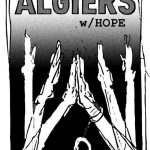
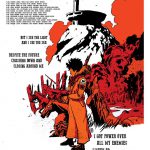
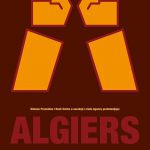
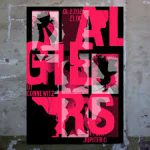
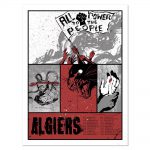
Für ihre Konzerte arbeiten Algiers gerne mit lokalen Künstlern zusammen, die die Plakate entwerfen. Einige Exemplare habe ich hier einmal versammelt, manche sind auf den Konzerten oder online noch erhältlich.

Designs und Copyrights: Ryan Mowry, Hannes Hirche/Falk Schwalbe, Antonio Karaca/Petra Vrdoljak a.k.a. Radnja …

Bob Marley & The Wailers, „Catch A Fire“ (1973)

unter anderem mit Midnight Ravers


David Hinds on the Early Years of Steel Pulse and His Youth in England

Steel Pulse sind eine der erfolgreichsten Reggae Bands auf diesem Planeten. Leadsänger und Bandgründer David Hinds, Kind jamaikanischer Einwanderer, wuchs in Handsworth, Birmingham auf. Im Gespräch mit afropop erinnert er sich an seine Jugend als eine Zeit rassistischer Übergriffe und Konflikte zwischen Schwarzen und der weißen Mehrheit. Als Folge davon nahm er schon früh jenes „doppelte Bewusstsein“ an sich wahr (double consciousness), von dem schwarze Intellektuelle wie W.E.B. Du Bois oder Paul Gilroy sprechen.

Hört hier: Babylon Is Falling: David Hinds on the Early Years of Steel Pulse and His Youth in England on afropop.org

Einer ihrer bekanntesten Songs, Handsworth Revolution.


1982 veröffentlichten Steel Pulse einen weiteren Meilenstein des UK Reggae, True Democracy

From an Identity of Passions&Powered by WordPress & Theme by Anders Norén